- EU leaders meet in Dublin to discuss AI for the first time
- The discussions aim to guide the EU’s policy on AI technology
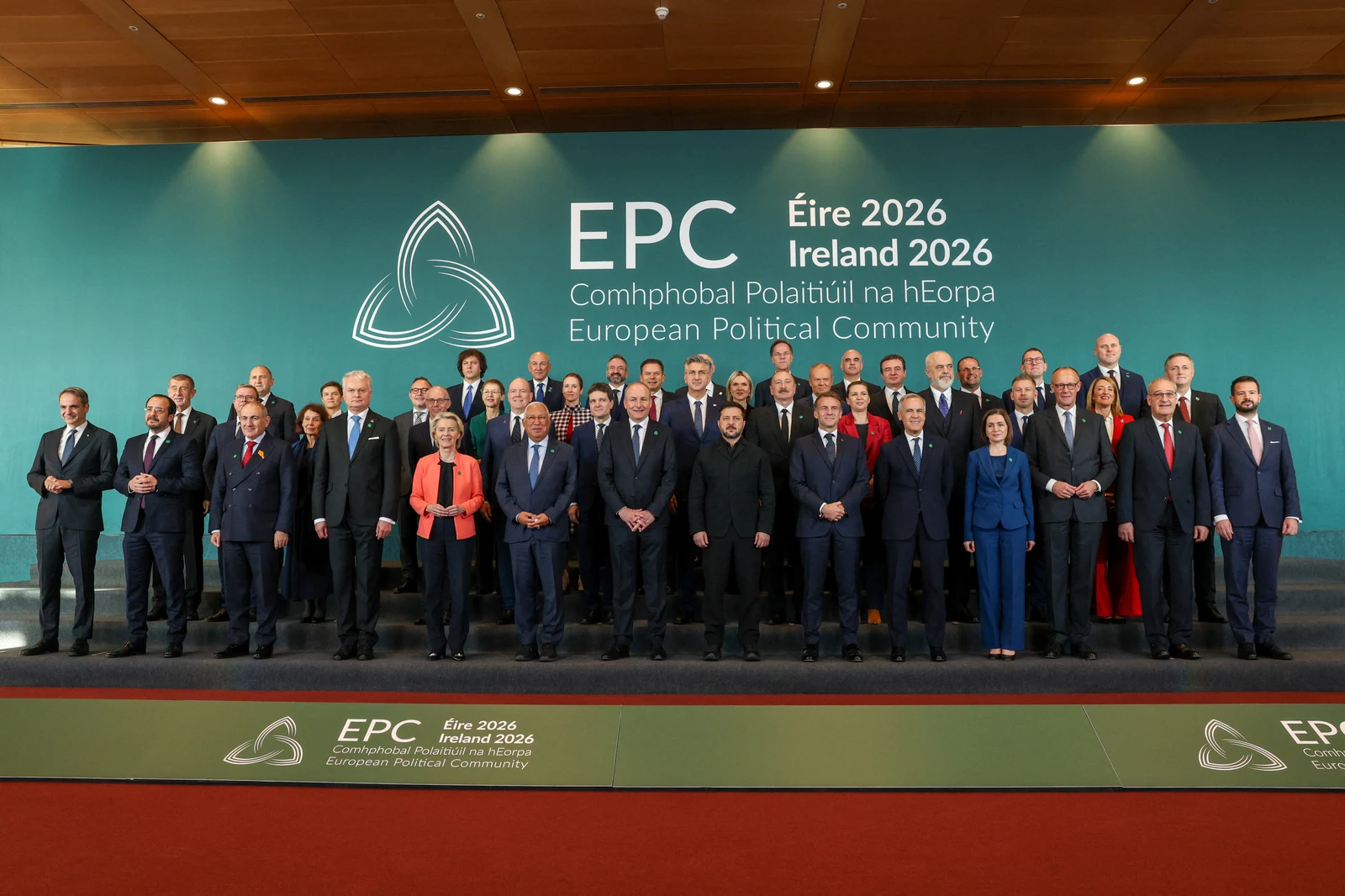
Dublin: EU leaders will discuss artificial intelligence together for the first time in Dublin on Friday in critical talks that will further guide the bloc’s policy on the rapidly evolving technology.
The European Union faces a delicate balancing act: it wants to unlock AI’s potential and stay in the race with China and the United States, but also protect against the risks it poses to citizens and businesses.
The leaders will hear from the head of French AI darling Mistral, Arthur Mensch, as well as Nobel-prize winner and researcher Geoffrey Hinton, widely known as the “godfather of AI.”
The summit comes against the backdrop of the scandal roiling Nvidia, one of the most important players in AI, after revelations CEO Jensen Huang had two extramarital affairs, including one with a woman accused of spying for China.
Although US markets are more exposed to AI, tech stocks worldwide took a hit on Thursday after Huang resigned.
An EU official told AFP Nvidia was not officially on the leaders’ agenda but that would not prevent anyone from “bringing it up” after recent developments.
The leaders would likely want to discuss what security ramifications potentially arise from the scandal, the official added.
Mitigate harms
Mistral’s Mensch will be part of the leaders’ discussions on how the technology can boost the European economy and how to develop more European AI.
When US CEOs including OpenAI’s Sam Altman and Anthropic’s Dario Amodei made calls this year to slow down AI development, Mistral — considered Europe’s top AI model developer — pushed back and urged Europe to steam ahead.
Estonia and Finland said in a letter ahead of the talks that Europe needed to “establish EU-level arrangements for responding to serious AI incidents,” calling for “developing advanced AI and governing it responsibly.”
Pointing to past overdependence on non-EU suppliers for fossil fuels and critical minerals, Estonia’s Prime Minister Kristen Michal told AFP: “We should not make the same mistake. We should invest in new technologies.”
Also during leaders’ talks on AI’s impact on society and security, former Google researcher Hinton will be part of a discussion about protecting rights and jobs as well as the security challenges the technology poses.
Hinton and fellow computer scientist Yoshua Bengio led the warnings about AI’s threats in the months after the release of OpenAI’s ChatGPT in 2022, which kickstarted the latest AI frenzy.
James Green, a researcher at the Center for European Reform, said the EU needed “an all-of-the-above strategy” on AI.
“Improve the business case for developing AI in Europe, strengthen its leverage to ensure access to the best models and related technologies, responsibly promote AI deployment to reap the economic benefits, and harness regulation and international partnerships to mitigate harms,” Green said.