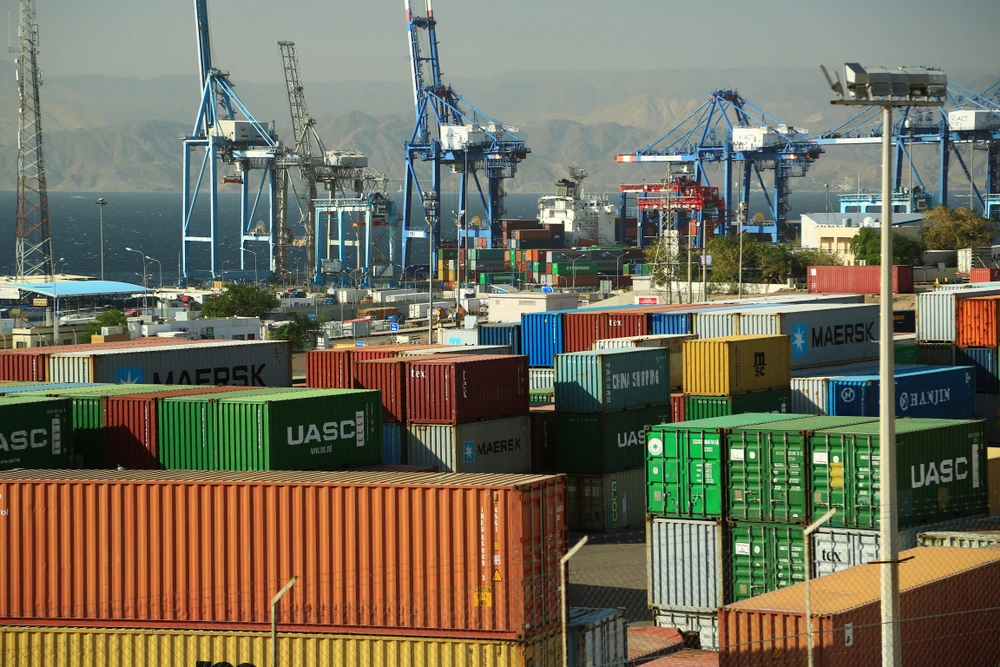
- Jordan's total exports rose by 10.8% year-on-year, reaching 8.52 billion Jordanian dinars ($12 billion) in the first nine months of 2026.
- The trade deficit decreased by 7.6% as imports only increased by 1.8% to approximately 15.26 billion dinars.
- National exports were bolstered by higher shipments of crude potash, nitrogenous fertilizers, and clothing, while precious jewelry exports fell by 23.6%.
- Crude oil imports surged by 42.3%, contributing to the rise in overall import costs.
JEDDAH: Jordan’s trade deficit narrowed by 7.6 percent in the first nine months of 2026, as total exports rose 10.8 percent year on year while imports increased by a more modest 1.8 percent, according to official data.
Total exports reached 8.52 billion Jordanian dinars ($12 billion) in the January-September period, comprising 7.4 billion dinars in national exports and 1.12 billion dinars in re-exports, the Jordan News Agency, or Petra, reported, citing the Department of Statistics.
Jordan’s trade performance comes amid external pressures linked to regional tensions, which the International Monetary Fund said have caused temporary disruptions in energy markets, reduced tourism activity and increased shipping costs.
Despite these challenges, most economic sectors have continued to operate normally, with some benefiting from stronger external demand and higher export prices, the IMF said.
Imports stood at around 15.26 billion dinars, while the export-to-import coverage ratio improved to 56 percent, up from 51 percent in the same period of 2025.
Potash and fertilizer exports rise
The increase in national exports was supported by higher shipments of raw potash, which rose 17.2 percent, nitrogenous and chemical fertilizers, up 11.5 percent, and clothing and related accessories, which increased 5.5 percent.
Pharmaceutical preparations and vegetables and fruits also recorded gains of 3 percent and 4.2 percent, respectively. However, exports of precious jewelry and ornaments declined by 23.6 percent during the period, according to the report.
Crude oil imports jump
“Regarding imports, an increase was registered in crude oil and its derivatives that rose 42.3 percent and cereals 9.3 percent, respectively,” Petra stated.
In contrast, imports of vehicles and motorcycles fell by 32.3 percent, precious jewelry and ornaments declined by 26.2 percent, machine tools dropped by 22.2 percent, and electrical machinery and equipment decreased by 4.5 percent.
Meanwhile, the strongest growth in imports came from countries belonging to the Greater Arab Free Trade Area, known as GAFTA, including Saudi Arabia, according to Petra.
Iraq and Syria shipments increase
At the market level, Jordan’s national exports to Iraq increased by 24.2 percent during the first nine months, while shipments to Syria rose by 25.3 percent.
Exports also increased to non-Arab Asian markets, including China, and EU countries, including the Netherlands, the report showed.
In September alone, Jordan’s total exports reached around 1.06 billion dinars, comprising 935 million dinars in national exports and 121 million dinars in re-exports, while imports amounted to nearly 1.97 billion dinars, leaving a trade deficit of 908 million dinars.