
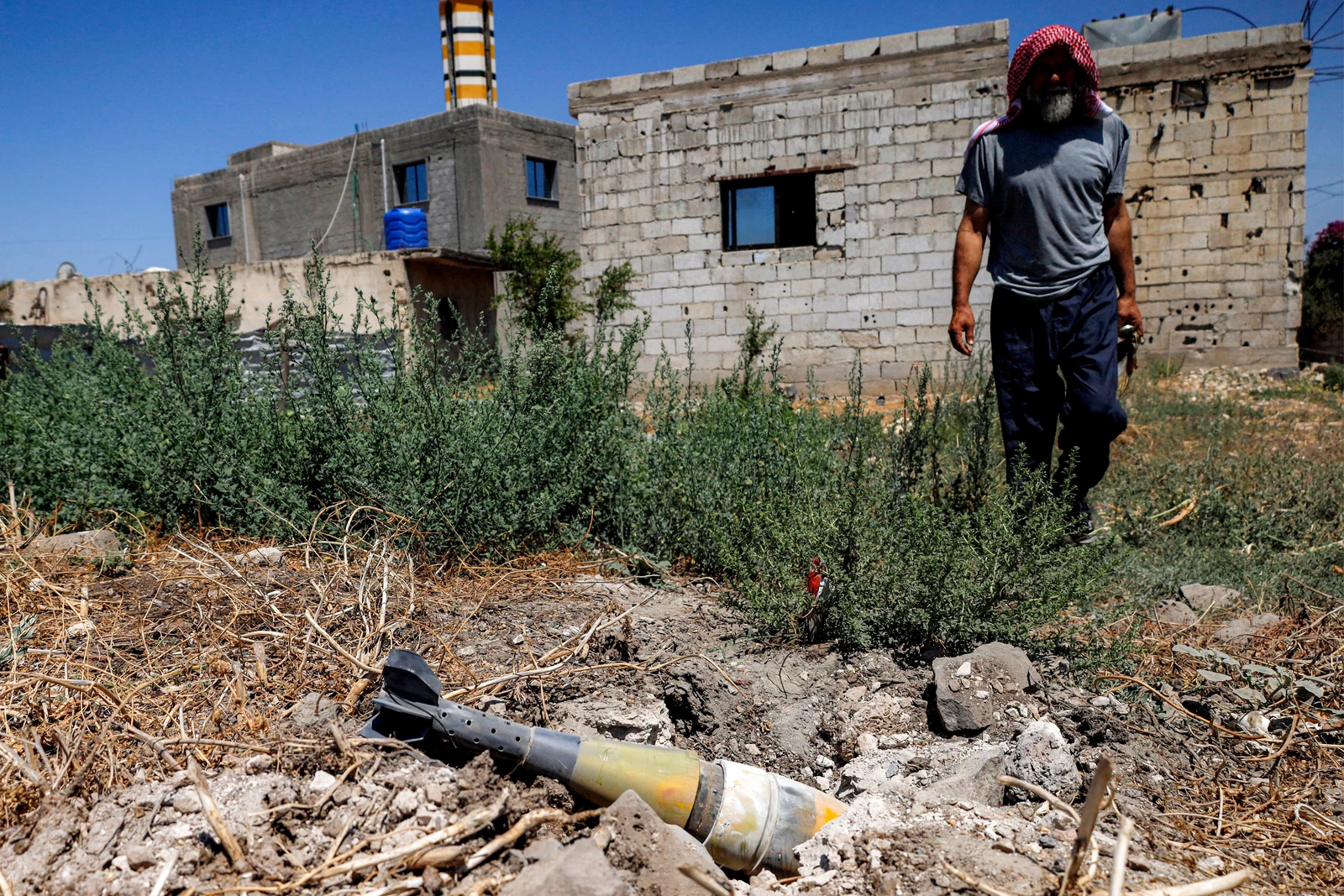

There is something deeply disturbing about what is happening in southern Syria. While the international community speaks of sovereignty, territorial integrity and diplomatic solutions, Israel is steadily creating a new reality on the ground. What was initially presented as a temporary security measure following the collapse of Bashar Assad’s regime is looking less temporary by the day.
Israeli forces continue to conduct incursions, raids and detentions inside Syrian territory, establish military positions and expand their presence beyond the boundaries established by the 1974 disengagement agreement. The question that must now be asked is not simply why Israel is entering Syria but how long the international community intends to allow this to continue.
The warning issued by the UN this week should remove any ambiguity about the seriousness of the situation. The UN Independent International Commission of Inquiry on Syria said Israel’s military operations in southern Syria had become increasingly entrenched and warned that some actions, including the detention and transfer of civilians, could amount to war crimes. The commission described the situation as a “belligerent occupation” and said Israel’s actions were violating Syria’s sovereignty and territorial integrity.
Yet Israel continues to justify its actions in the familiar language of security. It argues that instability inside Syria and the uncertain future of the country require it to maintain positions and conduct operations to protect its citizens. No country can be expected to ignore genuine security threats. But security cannot become a blank check for indefinite military intervention in the territory of another sovereign state. If every powerful country were allowed to cross international borders, establish military positions and detain civilians whenever it claimed a security necessity, the entire architecture of international law would become meaningless.
More importantly, Israel’s argument raises a fundamental question: If these measures are truly temporary, where is the timetable for ending them?
The warning issued by the UN this week should remove any ambiguity about the seriousness of the situation
Hani Hazaimeh
That question matters because history in this region offers too many examples of “temporary” military arrangements becoming permanent facts. Israel has already occupied the Syrian Golan Heights since 1967 and its military presence in southern Syria following the collapse of the Assad government has added a new layer to an already unresolved territorial dispute.
The 1974 disengagement agreement established a buffer zone monitored by the UN and provided a framework that, despite decades of hostility, maintained a relatively stable separation between Israeli and Syrian forces. The expansion of Israeli military activity into and beyond that area has fundamentally disrupted that arrangement.
What makes the current situation even more troubling is the timing. Syria is attempting to emerge from more than a decade of devastating war, rebuild its institutions and restore its territorial integrity. Damascus has also signaled its willingness to pursue a diplomatic and security arrangement with Israel. Foreign Minister Asaad Al-Shaibani has repeatedly emphasized the need for negotiations and confidence-building measures, while US-mediated talks have sought to reduce tensions and establish security arrangements along the border.
But diplomacy cannot succeed if one side negotiates while the other continues to alter the facts on the ground.
What incentive does Syria have to negotiate seriously if Israeli forces can continue moving into Syrian territory while discussions are taking place? And what message does this send to the wider region? If negotiations are accompanied by military expansion rather than de-escalation, diplomacy risks becoming little more than a mechanism for legitimizing realities created by force.
Diplomacy cannot succeed if one side negotiates while the other continues to alter the facts on the ground
Hani Hazaimeh
This is where the international community, particularly the US and European countries, must be far more consistent. Governments that rightly insist on respect for sovereignty and territorial integrity elsewhere cannot remain silent when the same principles are violated in Syria. International law cannot be applied according to political convenience. The sovereignty of Syria should not become less important because the party violating it is Israel.
Nor should Syria’s internal weakness be interpreted as an invitation to take advantage of it. A country emerging from years of war is the country that needs its borders respected, not gradually redrawn by a stronger neighbor.
There is also a broader strategic danger. Continued Israeli military expansion in southern Syria risks creating another permanent flashpoint in an already fragmented Middle East. It could generate resentment among local communities, deepen instability along the border and undermine the Syrian government’s efforts to consolidate its authority. It could also create the conditions in which armed groups exploit popular anger and present themselves as defenders of Syrian territory.
The international community needs to draw a clear line. The answer to instability in Syria cannot be the gradual establishment of another Israeli-controlled security zone.
The UN warning should not become another report that generates headlines for a few days before being forgotten. The objective should be a security arrangement that protects both sides without compromising Syrian sovereignty.
The alternative is dangerous. If Israel is allowed to transform a military incursion into an entrenched presence and an entrenched presence into a permanent reality, the Middle East will once again be confronted with a familiar lesson: when facts are created by force and the world responds only with statements, the statements eventually become irrelevant.
Israel is not merely entering southern Syria. It is testing how far it can redraw the map before the world decides that enough is enough.
Hani Hazaimeh is a senior editor based in Amman. X: @hanihazaimeh


