

This time, Europe seems serious about holding Israel accountable — or at least that is what 11 European countries, together with Canada, want us to believe.
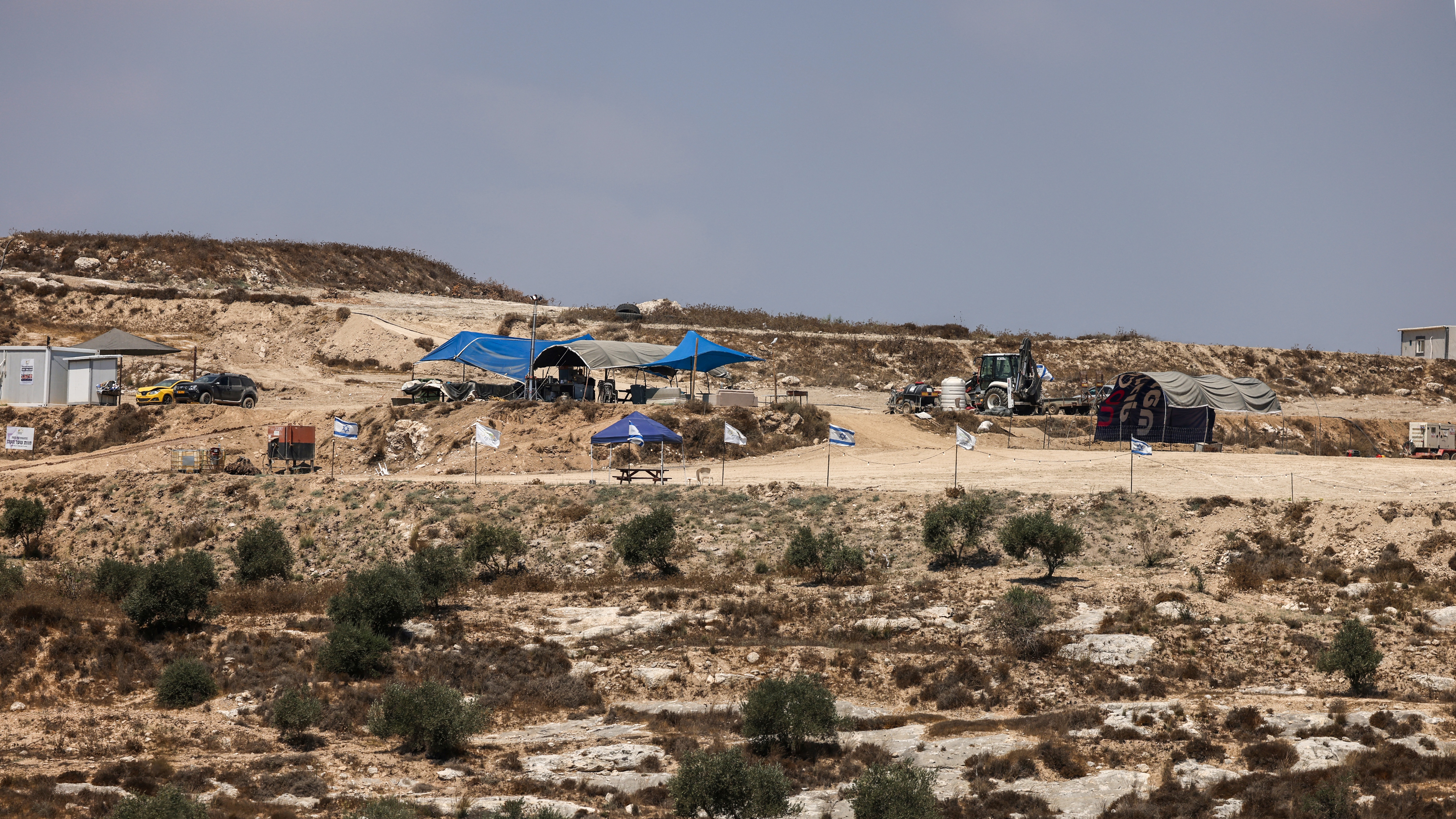
Canada, Denmark, Finland, France, Iceland, Ireland, Norway, Poland, Portugal, Spain, Sweden and the UK last week announced their intention to introduce national restrictions, support European restrictions or actively consider measures against trade in goods with illegal Israeli settlements in the West Bank.
Undeniably, the announcement represents a significant political and legal precedent. Dismissing it outright would be impulsive, particularly considering the participation of governments such as those of Canada and the UK, which have historically provided Israel with extensive political and diplomatic support.
Yet celebrating the announcement as an earth-shattering event without examining its context, timing and potential effectiveness would be equally rash. Worse, it could contribute to weakening the public pressure that finally compelled Western governments to take even these limited steps.
The political meaning of the initiative notwithstanding, several important qualifications must be considered.
Most of the 12 governments have announced intentions, rather than binding and immediately enforceable restrictions
Dr. Ramzy Baroud
First, most of the 12 governments have announced intentions, rather than binding and immediately enforceable restrictions. The decision is therefore still vulnerable to political negotiations, legislative delays, pressure from pro-Israel groups and changing electoral calculations. Without firm deadlines and enforceable mechanisms, today’s declared intentions could become irrelevant by the time they are implemented.
Second, France and Canada have yet to publish detailed implementation schedules. The UK, on the other hand, has announced a comparatively extensive package, covering settlement goods and services related to finance, construction, infrastructure, real estate and advertising. However, its restrictions could take six to nine months to enter into force.
Even if these measures eventually exert meaningful pressure, Israel has been granted additional time to advance its annexation plans and create further irreversible facts on the ground.
Third, the joint commitment focuses largely on goods, while Israel’s settlement enterprise depends on a far broader network of financing, investment, construction, technology and services. These connections often operate through complicated corporate structures that conceal whether a company or transaction is directly linked to a settlement.
Fourth, the initiative is primarily concerned with settlements, particularly the E1 project. E1 is the strategically located area between East Jerusalem and the Ma’ale Adumim settlement bloc. Israeli construction there would further divide the West Bank, sever Palestinian territorial continuity and isolate East Jerusalem from surrounding Palestinian communities.
Western governments did not arrive at these measures independently. They were pushed by civil society
Dr. Ramzy Baroud
Europe fears that completing E1 would destroy the remaining geographical basis for a future Palestinian state. That concern is defensible insofar as the two-state solution remains Europe’s declared foreign policy strategy.
Yet the joint declaration does not refer to the genocide in Gaza. Nor does it confront the wider system of Israeli military occupation that enables settlement expansion, forced displacement and land confiscation. It addresses one particularly alarming manifestation of the occupation while leaving the larger structure largely untouched.
Fifth, there is still no coordinated suspension of the EU-Israel Association Agreement and no collective European arms embargo against Israel. This omission is especially consequential when measured against the broader economic relationship. European Commission figures show that total EU-Israel trade in goods increased in both 2024 and 2025, the first two full calendar years following the beginning of the genocide.
Therefore, any losses suffered by the settlements — which represent only a small part of Israel’s overall trade — could therefore be absorbed through Israel’s much larger economic relationship with Europe.
The military contradiction is even more glaring. According to the Stockholm International Peace Research Institute, Germany provided 31 percent of Israel’s major arms imports between 2021 and 2025, making it Israel’s second-largest supplier after the US. Israel continued receiving weapons throughout this period despite the genocide in Gaza and the escalating violence against Palestinians in the West Bank.
European states are also major purchasers of Israeli military technology. Europe received 41 percent of Israeli arms exports during the same period, helping to sustain an industry deeply integrated into Israel’s military establishment.
Europe is therefore attempting to restrict the settlements while continuing to maintain economic and military relationships with the state that finances, protects and expands them.
A counterargument with some legitimacy is that the announced measures constitute a first step and that greater accountability may follow. But this argument carries weight only if we understand why these governments acted in the first place.
If the restrictions are primarily intended to weaken Benjamin Netanyahu before Israel’s October elections, they may prove to be temporary political instruments whose future depends on the electoral outcome.
Some hope, however, can be found in the growing public solidarity with Palestine across Europe. An opinion poll published by the European Council on Foreign Relations found that 46 percent of British respondents supported banning trade with illegal Israeli settlements, while only 18 percent opposed it. That is worth celebrating — not as proof of European governmental courage but as evidence of the power of sustained public mobilization.
Western governments did not arrive at these measures independently. They were pushed by protests, boycott campaigns, trade unions, civil society organizations, legal challenges and voters who refused to allow Palestine to disappear from political life.
Many European governments continue to provide Israel with the weapons, commercial relationships and economic stability it needs to sustain its wars against Palestine and other Arab countries. Their limited settlement measures do not erase that complicity.
If congratulations are due, they belong to the European and North American societies that continue to raise the political cost of supporting Israel and insist on accountability and respect for international law.
The latest measures should be welcomed — but only as proof that public pressure works and as a reason to intensify it.
Dr. Ramzy Baroud is a journalist, author and the editor of The Palestine Chronicle. His latest book, “Before the Flood,” was published by Seven Stories Press. His website is ramzybaroud.net. X: @RamzyBaroud


