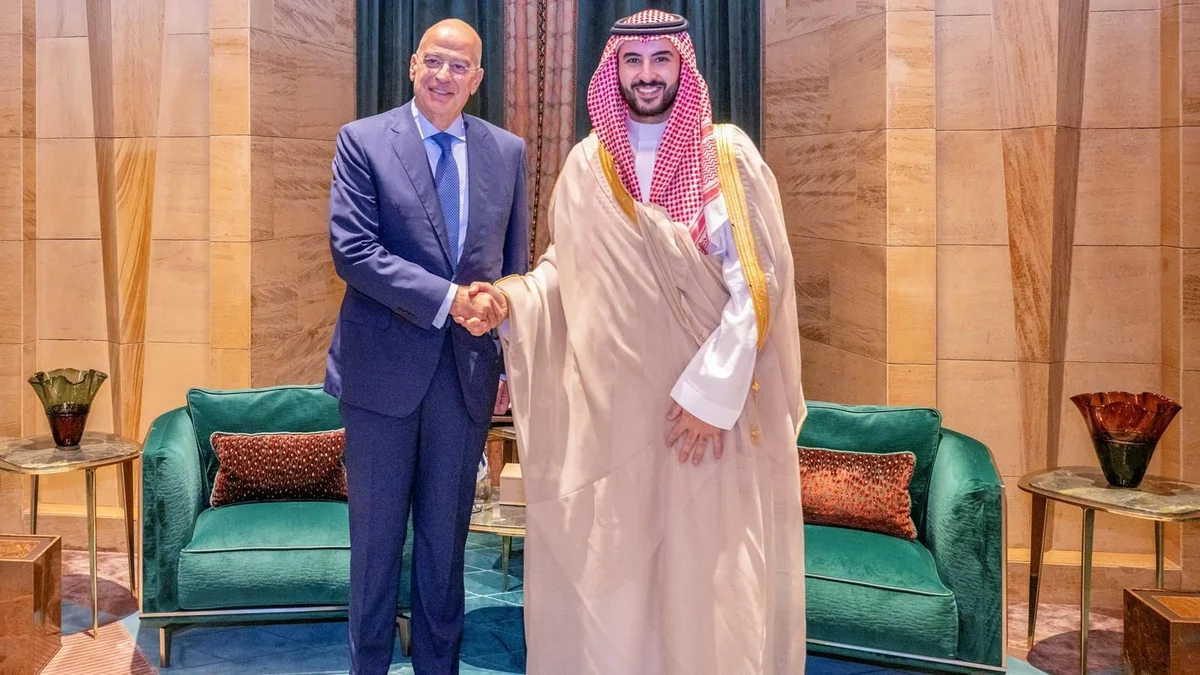
- Abdullah Al-Shomer: We are not a funder, and we are not a charity ourselves; we are an enabler
- Al-Shomer: In Abha, a single nonprofit organization provided affordable housing solutions to 1,000 families
MAKKAH: Saudi Arabia’s nonprofit sector is transforming from a traditional charitable ecosystem into a strategic driver of social innovation and community-led development, according to the general manager and spokesperson for the country’s National Center for Nonprofit Sector.
Abdullah Al-Shomer spoke to Arab News about how the sector is evolving faster than anticipated.
“The NCNP regulates, empowers and connects nonprofit organizations across Saudi Arabia,” he said.
“We are not a funder, and we are not a charity ourselves; we are an enabler.”
The center provides licensing mechanisms, governance frameworks and transparency tools designed to ensure sustainable expansion across the Kingdom.
Since 2021, Saudi Arabia has witnessed a 96 percent increase in specialized nonprofit organizations, many of which now deliver services once managed directly by government agencies.
Housing provides one of the clearest examples.
“In Abha, a single nonprofit organization provided affordable housing solutions to 1,000 families,” Al-Shomer said.
Nationwide, during the first half of 2025, about 54,000 families benefited from Sakani home ownership support, while almost 30,000 housing units had been handed over by September 2025.
Efforts to drive national economic diversification have seen the sector’s value surge from about SR8 billion ($2.1 billion) to almost SR73 billion, Al-Shomer said, representing a contribution of about 1.55 percent to gross domestic product.
Saudi Arabia aims to increase that figure to 5 percent of GDP by 2030, compared with about 1 percent in 2023.
“The sector has grown nearly sevenfold,” he said.
In 2024, the number of nonprofit organizations operating across the Kingdom recorded growth of 341 percent, exceeding annual planning targets by double.
Saudi Arabia is often portrayed internationally as a highly centralized state, prompting questions about the autonomy of nonprofit organizations.
Al-Shomer rejected the notion that nonprofits function merely as extensions of government.
“What we have built is a model in which the government sets the framework while the impact is driven by people,” he said.
He added that Saudi nonprofits are legally independent entities.
“They raise their own funds, run their own programs and make their own decisions.”
According to Al-Shomer, the state’s role through the NCNP is to ensure governance, accountability and public trust, while strategic decisions remain in the hands of each organization’s board and community.
Saudi Arabia is also “deliberately making it easier” to engage with international nonprofit organizations.
The Kingdom already collaborates with international entities across environmental sustainability, humanitarian relief, education and social innovation.
Existing partnerships include organizations such as the Asian Venture Philanthropy Network in Singapore, Stanford University, and counterparts across Gulf Cooperation Council countries including Oman and Kuwait.
Efforts are now underway to streamline licensing procedures further to reduce barriers for overseas organizations wishing to establish operations in Saudi Arabia.
Responding to criticism that Saudi Arabia’s nonprofit ecosystem remains top-down, Al-Shomer argued that philanthropy has long been embedded within Saudi society.
“The Saudi people have been giving long before any institution existed,” he said.
“What is new is not the impulse to give, but the infrastructure to channel it.”
Digital platforms such as Ehsan and Takatuf have simplified both charitable giving and volunteering, allowing citizens to contribute with unprecedented ease.
Today, 96.8 percent of registered nonprofit organizations are specialized in national development priorities, including environmental sustainability, family development, women’s empowerment and disability services.
Women are a major force in Saudi Arabia’s nonprofit transformation, making up 58 percent of volunteers nationwide.
They are leading initiatives spanning healthcare, education, family development, disability services and financial inclusion.
Al-Shomer said this reflects both Vision 2030’s broader empowerment agenda and a longstanding societal readiness now finding institutional expression.
“We expect that role to continue to deepen,” he said.
Innovation, Al-Shomer said, has become central to the sector’s evolution.
Saudi Arabia’s national giving platform, Ehsan, launched in 2021 under the supervision of the Saudi Data and Artificial Intelligence Authority, has become the Kingdom’s primary digital channel for organized philanthropy.
“Donors can contribute in under 10 seconds,” he said.
In late 2024, the NCNP signed a partnership agreement with Google Cloud to strengthen AI and analytics capabilities throughout the sector.
That same year, the center received the Google Cloud Public Sector Innovator Award.
One of the nonprofit sector’s most significant milestones, according to Al-Shomer, was the transformation of King Khaled Eye Specialist Hospital into a nonprofit entity in late 2024.
The transition “allowed the institution to attract partnerships, retain global talent and sustain excellence without relying entirely on the state budget,” he said.
The model is now being explored across sectors including healthcare, education, culture and research.
According to the NCNP’s 2025 Annual Report, Saudi Arabia now ranks first among Middle East and North African countries on the Global Philanthropy Environment Index, achieving the region’s highest score for enabling philanthropic activity.
The NCNP aims to position Saudi Arabia as the philanthropic hub of the MENA region, supported by streamlined licensing procedures and expanding international partnerships.
Reflecting on his personal motivation, Al-Shomer said witnessing the sector overcome longstanding barriers continues to drive his work.
“I have seen first-hand the operational challenges and regulatory hurdles that limited what the sector could achieve,” he said.
“What drives me is watching those constraints being systematically removed.”