


ISLAMABAD: Just before the sharp thwack of a racket hitting a tennis ball, a worn 100-rupee note, faded but intact, was passed between two strangers during a brief lull at the Pakistan Tennis Federation (PTF) headquarters in Islamabad last week.
In that gentle warm afternoon exchange, the note carried the weight of nearly six decades of separation and a quiet hope, forging an unexpected bridge between the two men from neighboring lands that were once part of the same country.
Muhammad Ali Akbar, a former Pakistan Davis Cup captain and a writer in his 70s, was watching a juniors tennis match, when he struck up a casual conversation with Noor-e-Alam Chowdhury.
Little did he know that Chowdhury hailed from Bangladesh. What began as a light exchange soon took an unexpected turn, deepening into a moment that stirred long-buried memories through a single, quiet gesture.
“When I told him I had been to Bangladesh, he showed me this note,” Akbar recalled his conversation with Chowdhury, who had flown in to Pakistan with his daughter on April 3 for her International Tennis Federation (ITF) juniors’ tournament matches.
“I thought that’s cute,” Akbar said of the banknote Chowdhury gave him.
The note, which has English, Urdu and Bengali printed on it, is a fragile relic from an era when present-day Bangladesh and Pakistan formed one nation.
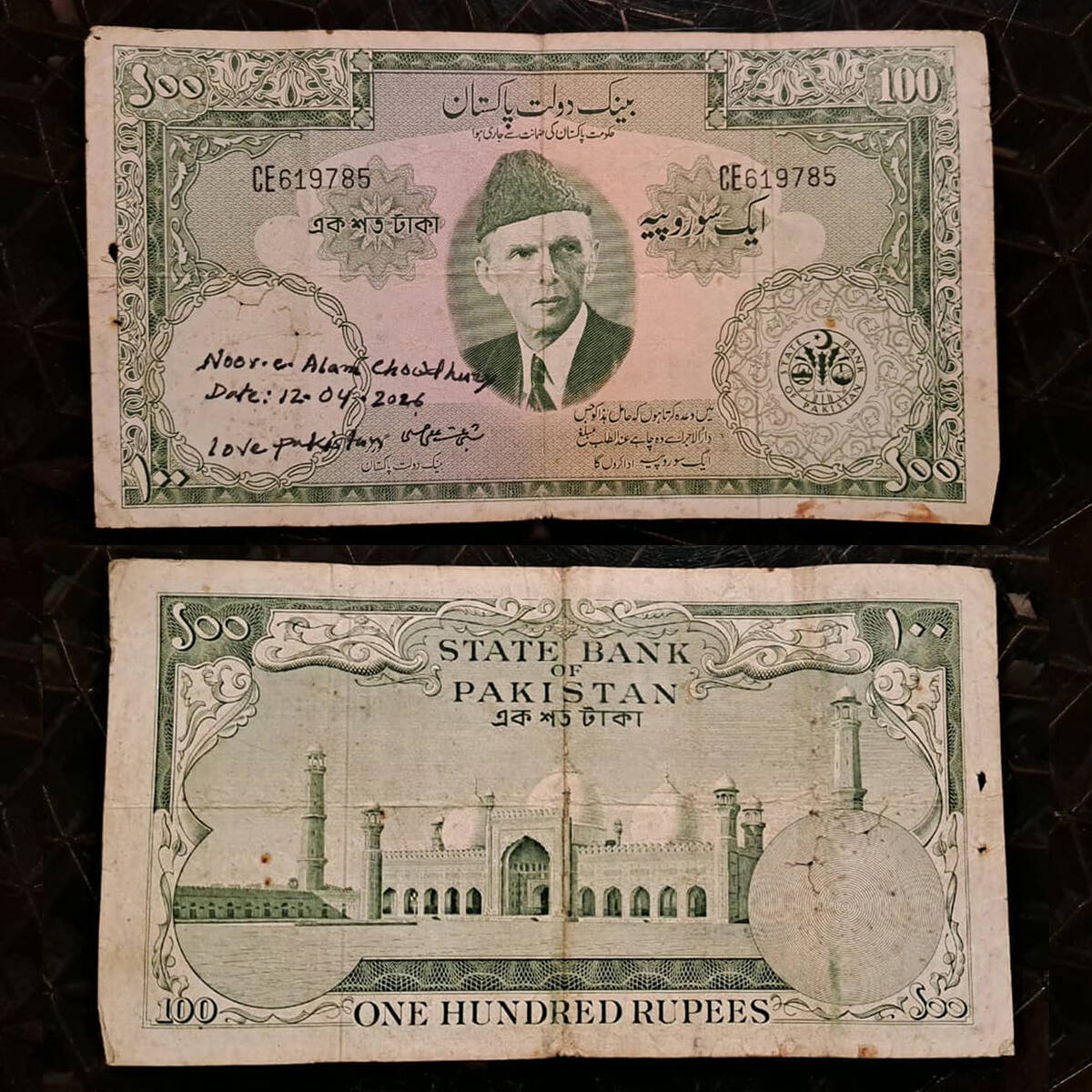
Front and back views of the Rs100 note. (Asim Khan)
Bangladesh, formerly known as East Pakistan, separated from the then West Pakistan following a bloody civil war in 1971, an event that long cast a shadow over bilateral ties. The two countries have moved closer since 2024, following the ouster of Prime Minister Sheikh Hasina who was considered an India ally.
Chowdhury had carried the note from Dhaka as a family heirloom.
“My mother and her younger sister visited Murree and Islamabad somewhere in [the] 1960s, as a girl guide,” he said. “She [my mother] gave this 100-rupee note to my daughter.”
Chowdhury’s daughter, Yeanna, is currently participating in the ITF juniors’ tournament in Islamabad for players aged 13-18 years. The duo is visiting Pakistan till April 25.
The 9th-grader said her grandmother gave her the banknote and told her to take it with her to Pakistan before she left Dhaka with her father for the ITF tournament.
“I gave it to my dad and he gave it to [Akbar],” she told Arab News.
The banknote’s design was issued by the State Bank of Pakistan on December 24, 1957, featuring the portrait of Pakistan’s founder Muhammad Ali Jinnah and reflecting a united East and West Pakistan geography that no longer exists on the present-day world map.
For Chowdhury, the piece of paper holds something far greater than nostalgia.
“This is a very valuable thing for both nations. Bangladeshis and Pakistanis also,” he said. “Because you can see the note, there’s two languages written. [State] Bank [of] Pakistan written in Urdu and Bangla.”
Akbar felt the same quiet power in the gesture.
“I think I might not even be able to buy a bottle of Coca Cola with this,” he said. “But it has value.”
Chowdhury’s journey to Islamabad itself carried symbolic weight as he decided to travel to Pakistan after both countries resumed direct flights in Jan. this year after a hiatus of 14 years. The flights were suspended in 2012 by the then Sheikh Hasina administration on “security” grounds.
“Bangladesh and Pakistan had no direct flights,” the 47-year-old said. “Just [now] direct flights started from Dhaka to Karachi. Then we decided to come here.”
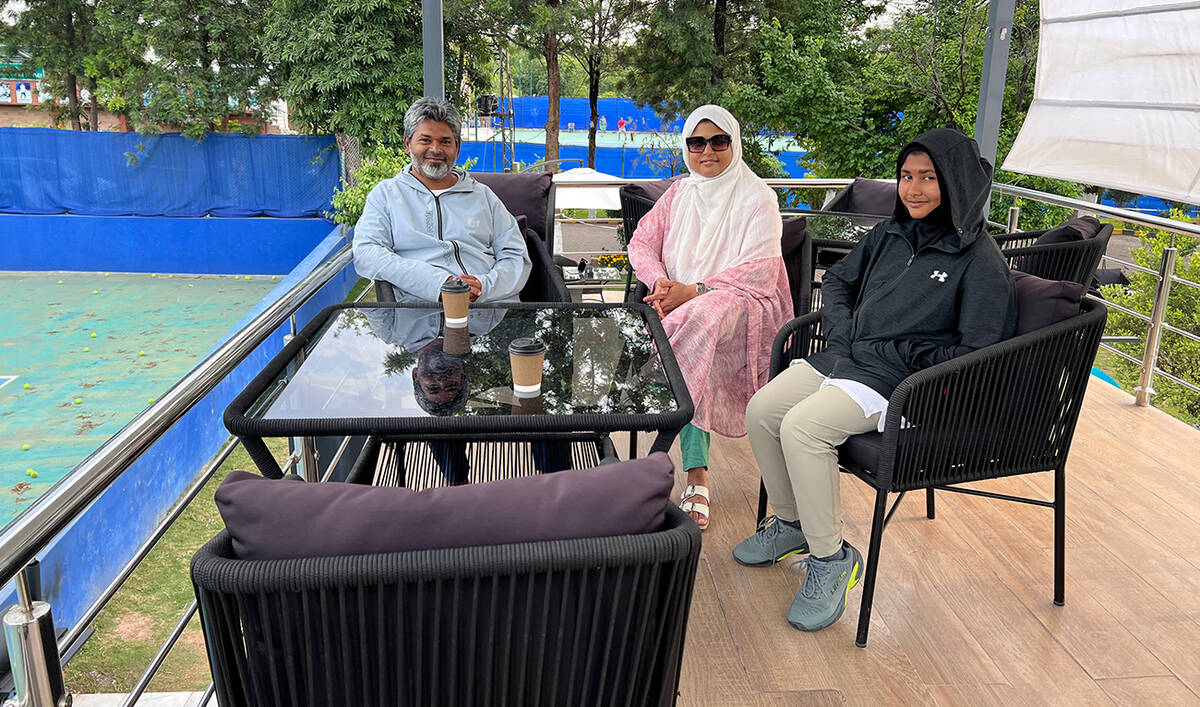
Bangladeshi citizen Noor-e-Alam Chowdhury (left) poses for a photo while having a chat with his family outside a tennis court at the Pakistan Tennis Federation in Islamabad, Pakistan, on April 17, 2026. (AN)
The banknote, though long demonetized, sparked something deeper, when Chowdhury placed it in Akbar’s hands: a sense of momentary reconnection with a shared past.
For Akbar, who has spent years writing about the subcontinent’s layered history, such artifacts are more than just curiosity.
“If you learn about the past, then you can handle the future better,” said Akbar, who acknowledges the difficult chapters between the two nations but sees hope in gentle human gestures.
“We were one people at a time and now things are warming up again. These little things can turn into a river.”
For Chowdhury and his family, the visit, his daughter’s first time in Pakistan, has been full of unexpected warmth.
“This is my first time in Pakistan. Pakistani people are very good and nice, and very welcoming,” Yeanna said.
Back on the sun-dappled lawns of the PTF tennis courts, her faded banknote has left a lasting memory in its own small way.
“It has done what little it could,” Akbar said, looking at the banknote held in his hand.


