


PESHAWAR: In Pakistan’s northwestern Khyber Pakhtunkhwa province, three teenage sisters are quietly building a squash legacy by excelling on courts in the country and around the world in a sport long dominated by men.
The trio, hailing from Peshawar, have won 78 gold medals in domestic and international tournaments. From a government multipurpose stadium to national triumphs, the story of these hardworking girls speaks of raw talent, relentless family discipline and a will to rise above expectations in one of Pakistan’s most conservative regions.
The story of these sisters, 17-year-old Mehwish Ali, 14-year-old Sehrish Ali and 13-year-old Mahnoor Ali, is not only about medals but also about sacrifices made by their father, Muhammad Arif, a former athlete who used to play cricket and badminton. Arif later taught himself squash before selling his assets to support the sporting careers of his daughters.
Inside the Qamar Zaman Squash Court at Qayyum Stadium in Peshawar, the Ali sisters train on separate courts while their father sits outside, cheering and guiding his daughters as they play for more than three hours.
The eldest sibling, Mehwish, is Pakistan’s Under-19 number one, with 30 titles to her name. She balances her squash career with her studies in the 11th grade at a private college in Peshawar.
“To be honest, I don’t have any friends, but I think I’m blessed that I have my sisters as friends and as colleagues, as partners to play with me and to spend time with, and also my mom and dad too,” she told Arab News.
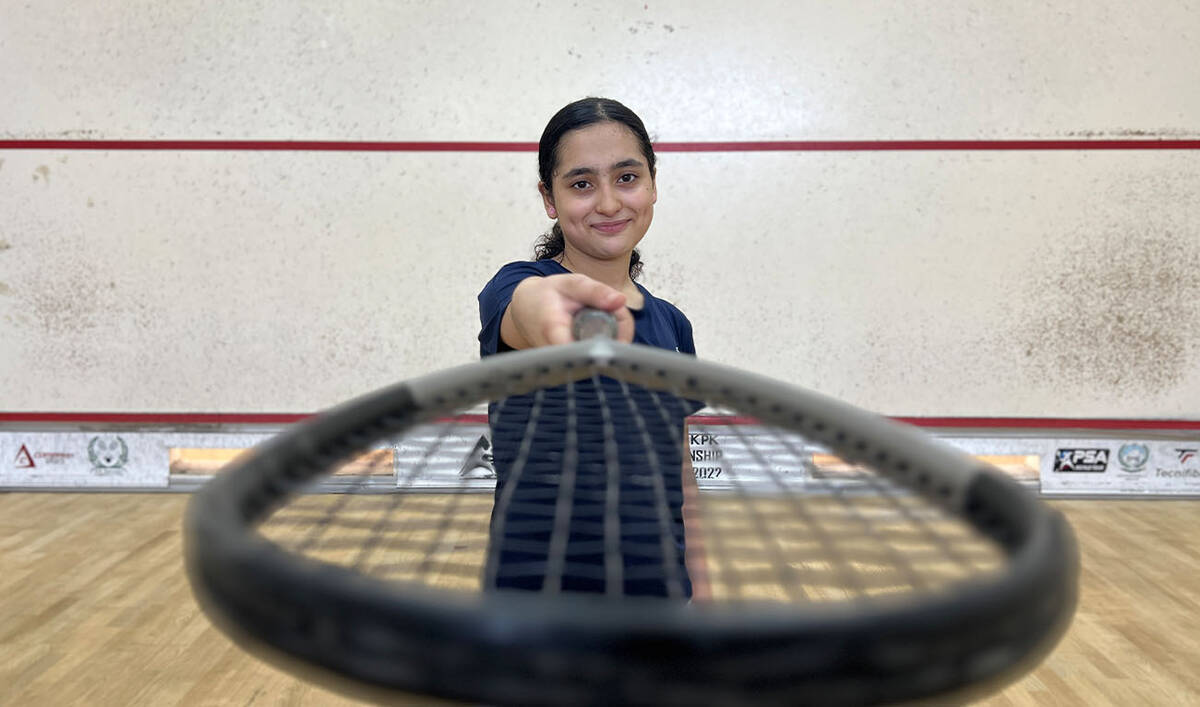
Mahnoor Ali poses for a picture at Qayyum Sports Complex in Peshawar, Pakistan on April 15, 2026. (AN Photo)
The middle sister, Sehrish, who is ranked number one in Pakistan in the Under-15 category, has also built an impressive record, winning 20 gold, five silver and five bronze medals in national and international tournaments.
“Whenever we play against each other, we are not sisters in the court,” she said. “We’re fighting it out. We give our best in the court.”
Asked about sibling rivalry, she said: “Outside the court, we sometimes get mad at each other for five minutes, but then we go back to normal.”
Sehrish said people call them “the squash family,” as their elder brother, who now lives abroad, was the first to take up the game.
The youngest sister, Mahnoor, has won 28 titles, including 15 international and 13 national tournaments, along with seven silver and one bronze medal.
Mahnoor takes time out from training and studies online in the seventh grade. She reminisces about her journey, which began almost by accident when her father enrolled her in squash for fitness.
“I started when I was seven years old,” she said. “I used to come here and just play for fun. I was not that into squash. I liked badminton more, so I thought I could go professional in badminton.”
“But since my elder brother and sister were playing squash and they were really good at it, I thought why not give it a try?” she added.
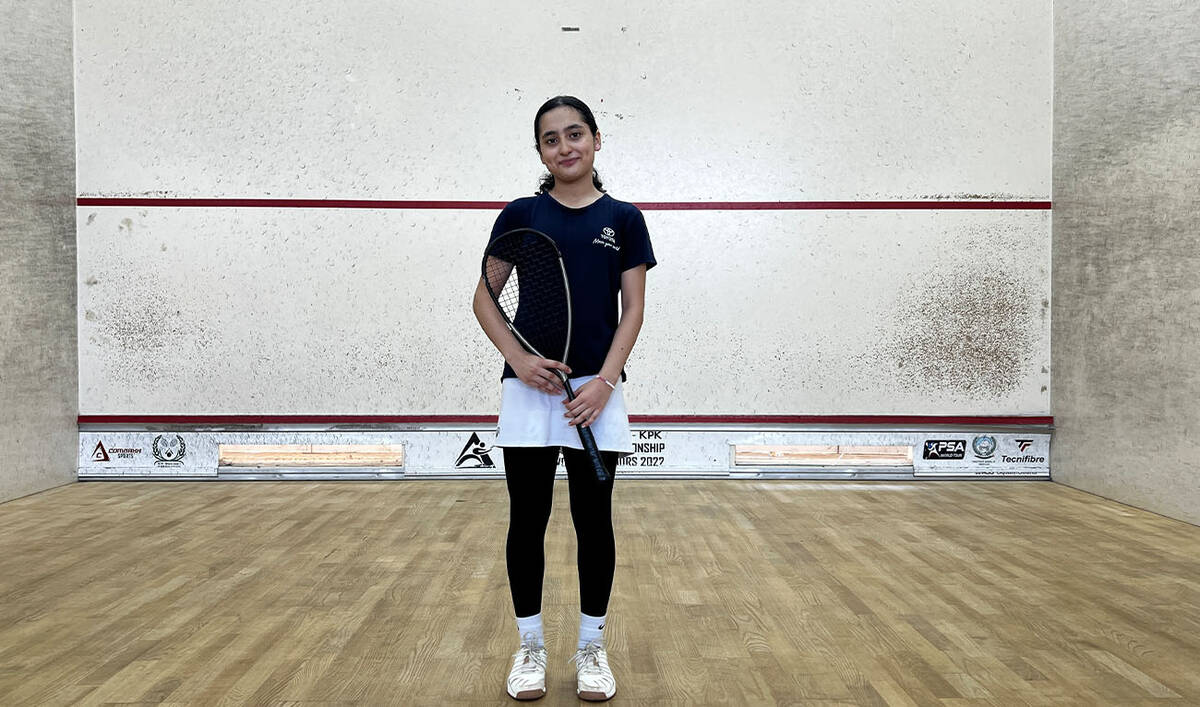
Mahnoor Ali poses for a picture at Qamar Zaman Squash Court at Qayyum Sports Complex in Peshawar, Pakistan on April 15, 2026. (AN Photo)
Mahnoor said sports were challenging for her in the beginning, but she persevered by balancing her routine between studies and training.
“I study online because I have morning sessions and evening sessions, so I don’t have time for school,” she said. “But I make time and take my classes. I worked really, really hard for this, like all these titles.”
Arif, the father of the girls, told Arab News he left his job, exhausted his savings and sold his gold, car and house for his children. He has been traveling with his daughters both nationally and internationally since 2021.
“I worked in a [medicine-related] firm and then I resigned for them, because I used to take them to and bring them back from tournaments and training and I needed to be with them during their travels,” he said.
He said his current challenge was to find sponsors for his champion children. For the past year, he continued, they have been supported by Toyota Pakistan, a leading automobile company.
“In Pakistan, it is really hard to get sponsors for female athletes,” he said. “They can’t go ahead easily [and play sports] because of the traditions in our society.
“Females don’t get the support that a male player gets,” he added.


