


Periodically, I find myself exploring the US State Department’s archival records — a treasure trove of documentation that illuminates Washington’s approach to international relationships.
One particular file, Document 109, dated June 5, 1974, at 5:15 p.m., captures a pivotal Washington encounter between King Fahd, who was then serving as Saudi Arabia’s second deputy prime minister, and US Secretary of State Henry Kissinger. Also joined by veteran diplomat Mohammed Ibrahim Masoud and other officials, the meeting would prove foundational.
Historians of bilateral relations recognize this gathering as the bedrock upon which numerous subsequent economic and military initiatives were constructed.
According to the declassified record, Kissinger declared: “It is our firm view that a strong Saudi Arabia is in the interest of the United States and will contribute to peace and stability in the area. The United States would never be indifferent to any threat to the Kingdom from the north or the south. We look with favor on Saudi Arabia’s playing a stabilizing role in the Gulf. We count on it to play that role. In your meetings at the Defense Department tomorrow, you will find your requests are well received.”
King Fahd emphasized that “it is nowhere in our policy that we will aggress. We need stability in the area,” while insisting that “we should review our military and civil interests.” He characterized producing “good, tangible results in our common interest” as the core objective of his visit to Washington.
During the same exchange, Kissinger told his distinguished Saudi counterpart: “Your visit is of signal importance, not only to the United States but to our relations with the entire Arab world. I am sure you will find the president (Richard Nixon) expressing the same sentiments.” He added: “As you are our oldest friend in the Arab world, it is right that we should make our first new special effort with Saudi Arabia. It can be an example to all other Arab countries as well.”
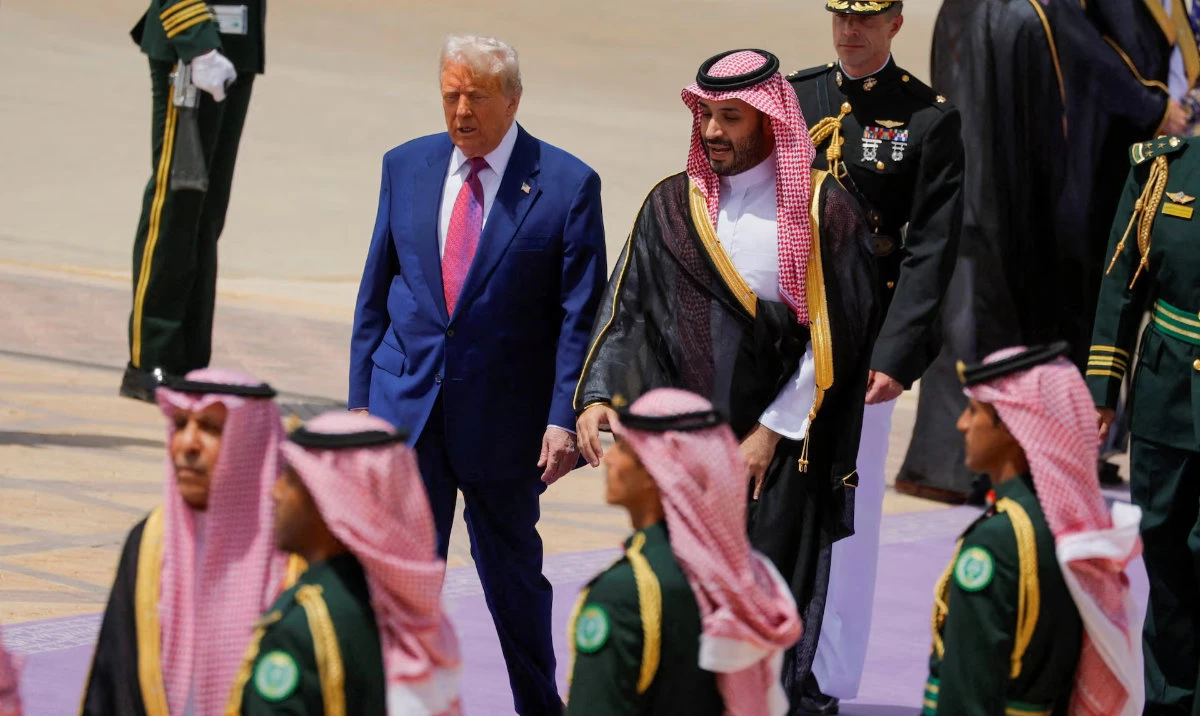
This 51-year-old Saudi-American conversation has fresh relevance as Crown Prince Mohammed bin Salman prepares for his visit to the US and face-to-face discussions with President Donald Trump this week. Preparatory working-level exchanges between both governments have already begun laying the groundwork for the agenda, priority issues and prospective agreements.
The crown prince’s upcoming trip echoes King Fahd’s historic visit, with both marking watershed moments in Saudi-American ties. This is particularly the case today against the backdrop of the Middle East’s transformation since Oct. 7, 2023. Riyadh’s energetic diplomatic initiatives pursuing peace and regional equilibrium reflect the Kingdom’s understanding that domestic advancement and its Vision 2030 objectives fundamentally depend on regional security.
The Kingdom aims to transform its economic relationship with the US beyond the dated ‘oil-for-security’ paradigm.
Hassan Al-Mustafa
Recent weeks have witnessed numerous high-level bilateral visits, most prominently Defense Minister Khalid bin Salman’s US trip last week. He posted on X: “I met with the US secretary of state, incoming national security adviser, secretary of defense and special envoy for the Middle East. Our discussions encompassed Saudi-American relations, the dimensions of the strategic partnership between our nations, and the evolving regional and international situations.”
This diplomatic activity unfolds amid negotiations establishing a mutual defense framework between the countries — potentially beginning with American commitments or executive orders before maturing into a legally enforceable treaty.
At the same time, Riyadh is pursuing access to cutting-edge military technology to modernize its defense infrastructure, including the acquisition of F-35 fighter aircraft. Recent events underscore the imperative nature of this objective: the Israeli-Iranian military confrontation, the Iranian and Israeli attacks on Doha, and persistent threats from armed militias and terrorist networks. These security challenges necessitate the construction of comprehensive Saudi defense capabilities, alongside enhanced cooperation with Washington through joint exercises, intelligence sharing and information exchange.
Military considerations interweave with investment priorities. The Kingdom aims to transform the economic relationship beyond the dated “oil-for-security” paradigm toward sophisticated, diversified engagement — particularly as the Public Investment Fund implements an ambitious strategy targeting the technology, artificial intelligence and renewable energy sectors, while expanding its American market presence. PIF Gov. Yasir Al-Rumayyan’s frequent US visits to negotiate major corporate partnerships reflect this strategic recalibration.
Economic imperatives directly intersect with Middle Eastern political and security dynamics. The Saudi leadership maintains that sustainable development requires resolving the region’s fundamental conflicts through a just, comprehensive peace. Consequently, Riyadh demands the establishment of an independent Palestinian state with East Jerusalem as its capital, categorically refusing normalization with Tel Aviv without an unequivocal Israeli commitment to Palestinian statehood.
Globally, this engagement underscores the enduring significance of Saudi-US relations and Riyadh’s diplomatic sophistication — particularly as the Kingdom cultivates substantial partnerships with China, Russia and other major powers. This exemplifies balanced diplomacy’s value: diversifying partnerships while preserving traditional alliances and advancing national interests without generating destabilizing friction with other stakeholders.
• Hassan Al-Mustafa is a Saudi writer and researcher interested in Islamic movements, the development of religious discourse, and the relationship between Gulf Cooperation Council states and Iran.
X: @Halmustafa


