- Herzog condemned what he called racist remarks during the election season targeting the country’s Arab minority
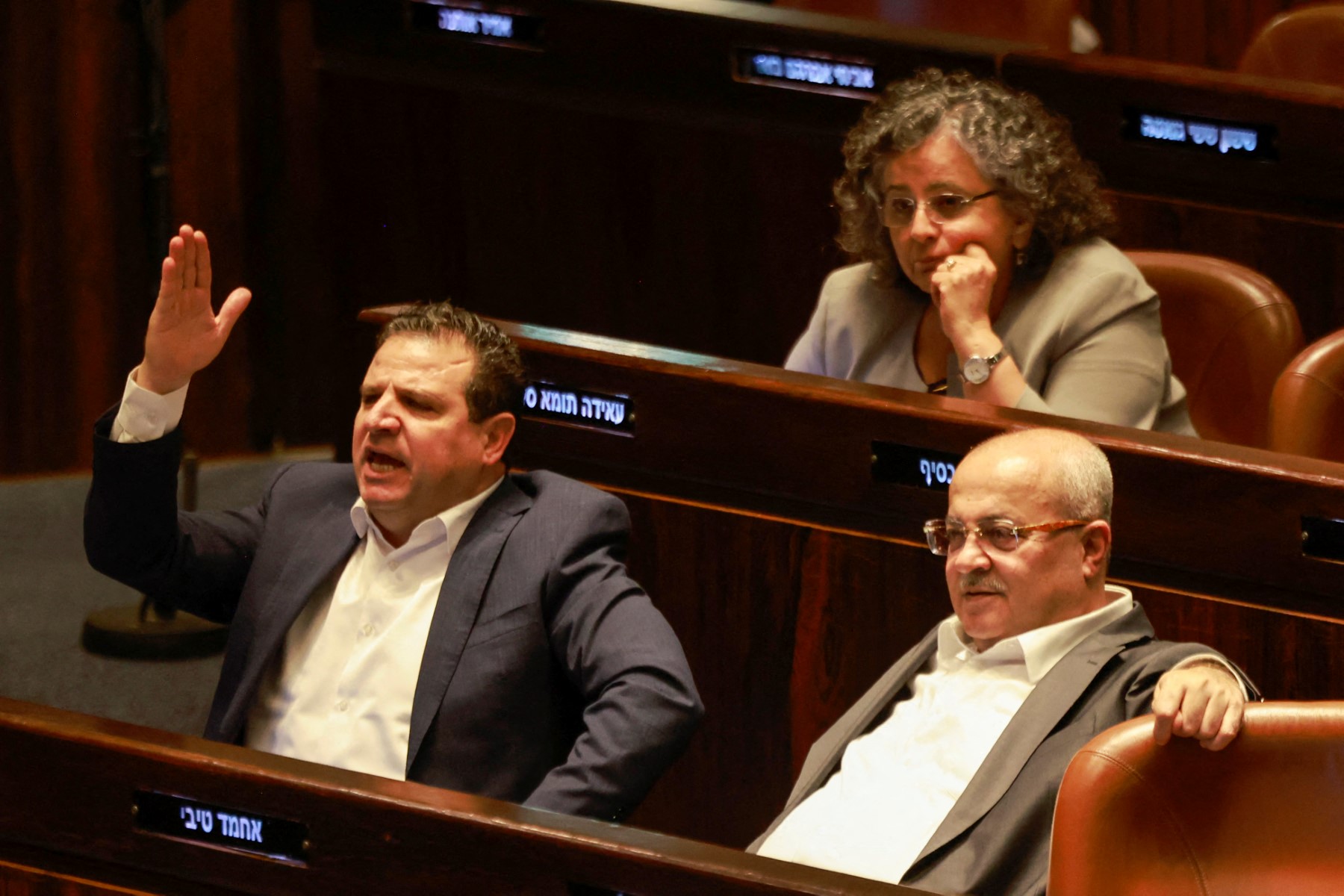
JERUSALEM: The largest Arab-Israeli bloc on Wednesday denounced “political persecution,” after one of its lawmakers was accused of accepting foreign money before last week’s elections, where the community turned out in record numbers.
Prime Minister Benjamin Netanyahu doubled down on the accusations of foreign interference in the October 27 vote.
“There are serious suspicions that foreign states have spent considerable sums to influence the outcome of the elections in Israel,” Netanyahu said in a video, speaking in front of an Israeli flag and the slogan “Prime Minister’s Office.”
The premier and his far-right allies have gone on the offensive against Arab-Israeli politicians, who could put main opposition leader Gadi Eisenkot in the top seat if they team up.
“The targeting of Ayman Odeh is political persecution, and we will not allow the Arab public’s vote to be delegitimized,” the Joint List, a coalition of three Arab-Israeli parties, said in a statement.
“Netanyahu is clinging to power and refusing to acknowledge the will of Arab citizens who voted overwhelmingly against his government,” it added.
Odeh, an outgoing lawmaker and former leader of the Joint List, is to be investigated as part of a probe into claims of foreign election interference pushed by Netanyahu’s Likud party, several Israeli media reports said.
A veteran of Israeli politics, Odeh used to lead the left-wing party Hadash, which is part of the Joint List.
Envelopes of cash
The reports, quoting unnamed officials, said the internal security agency Shin Bet was investigating whether he had received hundreds of thousands of shekels, roughly amounting to $100,000, from an unspecified foreign entity.
Attorney General Gali Baharav-Miara on Tuesday denied a Shin Bet request to interrogate other Arab party leaders without evidence, angering allies of Netanyahu, who have long sparred with her.
Netanyahu has pointed to the arrests of several people with envelopes of cash on election day in what authorities called localized incidents.
The premier accused leaders of accepting money from Qatar, an allegation previously levelled against Netanyahu’s own aides.
The Central Elections Committee said it had conducted an audit of 9,069 polling stations following complaints, but had found no evidence that would call into question the results’ integrity.
Yair Golan, a left-wing leader in the main opposition alliance, accused Netanyahu’s camp of abusing its power.
“The police are arresting political activists without court warrants, the Shin Bet is attempting to question senior elected officials without presenting any evidence, while the outgoing government refuses to recognize the election results,” Golan said.
He was likely referring to the arrest late Tuesday of Abed Abu Shehadeh, an Arab-Israeli journalist related to politician Sami Abu Shehadeh.
The journalist was being questioned on charges of “contact with a foreign agent,” rights group Adalah, which represents him legally, told AFP.
Earlier, Israeli President Isaac Herzog condemned what he called racist remarks during the election season targeting the country’s Arab minority, after repeated allegations promoted by Prime Minister Benjamin Netanyahu of fraud by Arab-majority lists.
“I hold Arab society in Israel in great respect. I value its contribution to the country in every area of life, and its desire to integrate. This is something to be welcomed. I condemn the coarseness and racist expressions that we have heard recently,” Herzog said upon receiving the official election results.
Meanwhile, the United Arab List said it would recommend that opposition bloc leader Gadi Eisenkot form the next government following last week's election.
"The parliamentary group of the United Arab List has decided to recommend Eisenkot to form the next government," the party known by its Hebrew acronym Raam said in a press statement ahead of a meeting with President Isaac Herzog, who is consulting with various political forces on the formation of a new government.