- Six-month program proposes 66 projects, but funding, access and security conditions remain unresolved
- Disputes over Hamas disarmament and Israeli withdrawal threaten to keep Gaza’s reconstruction on hold
LONDON: There was no shortage of detail in the “Six-Month Gaza Recovery Program” presented by the Board of Peace to an auditorium packed with diplomats on the sidelines of the UN General Assembly on Wednesday.
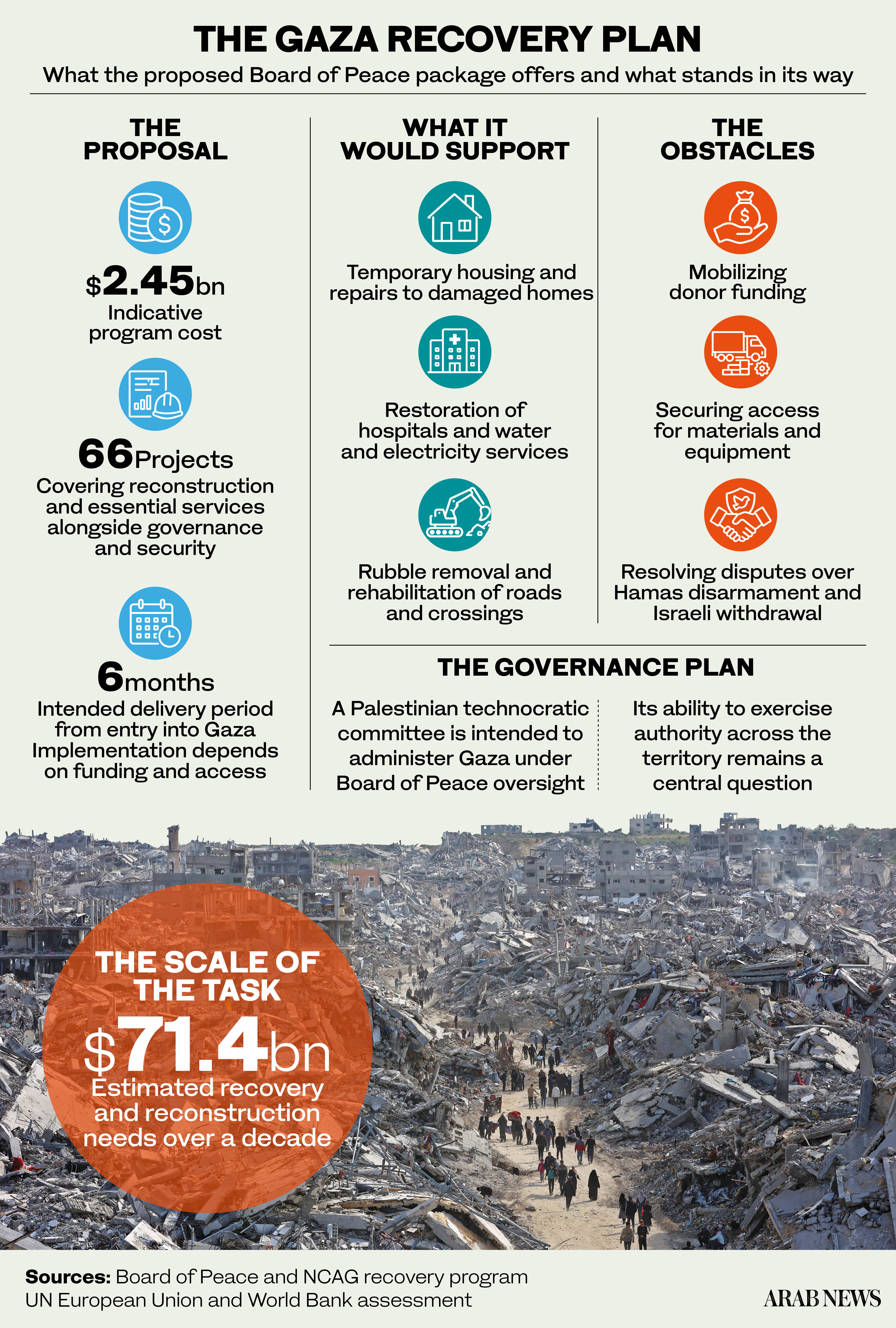
A two-page document set out estimated costs for 66 programs in six key areas — infrastructure development, human development, economic acceleration, digital transformation, legal affairs, and peace and security — with a total bill of about $2.45 billion.
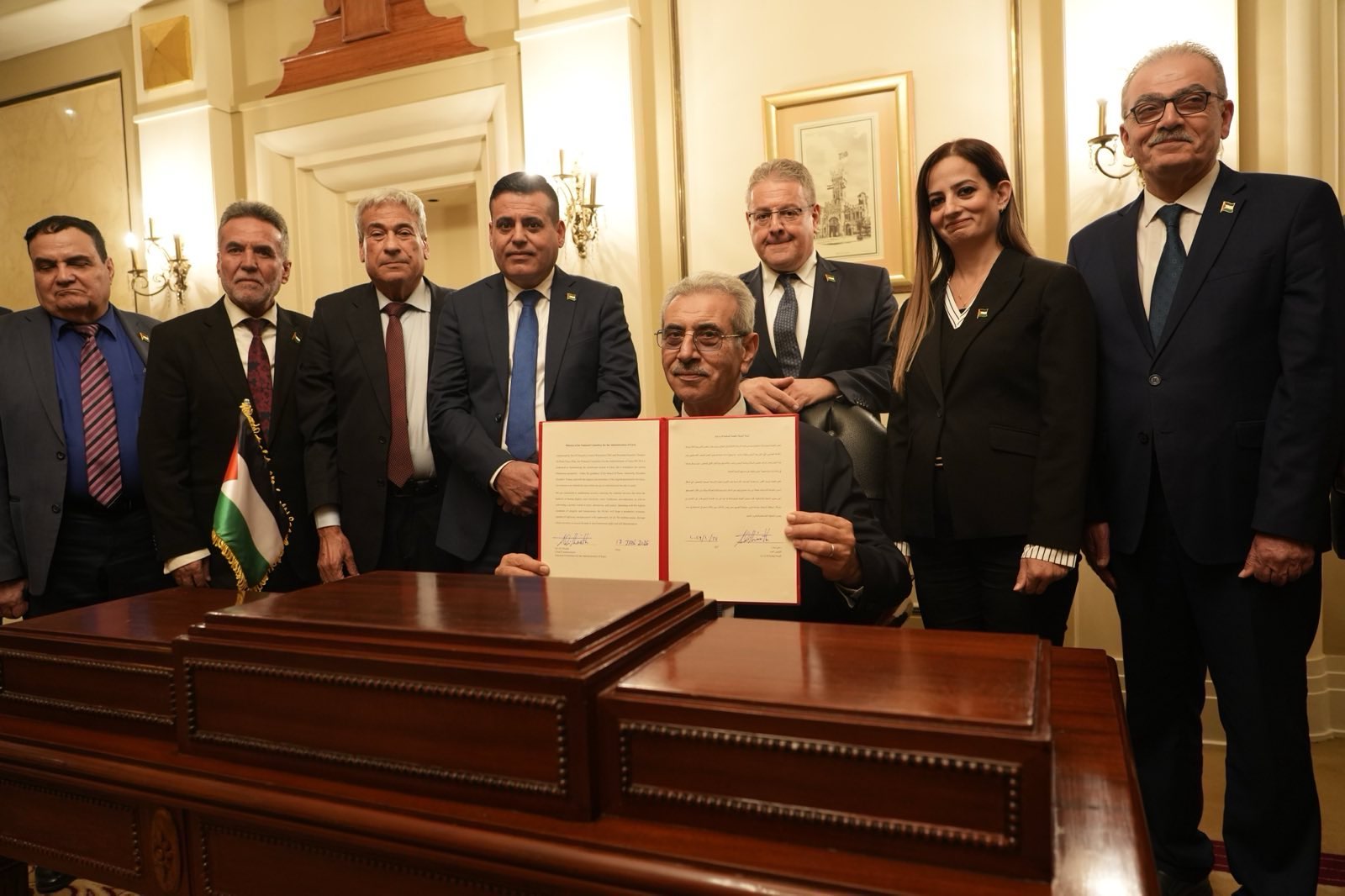
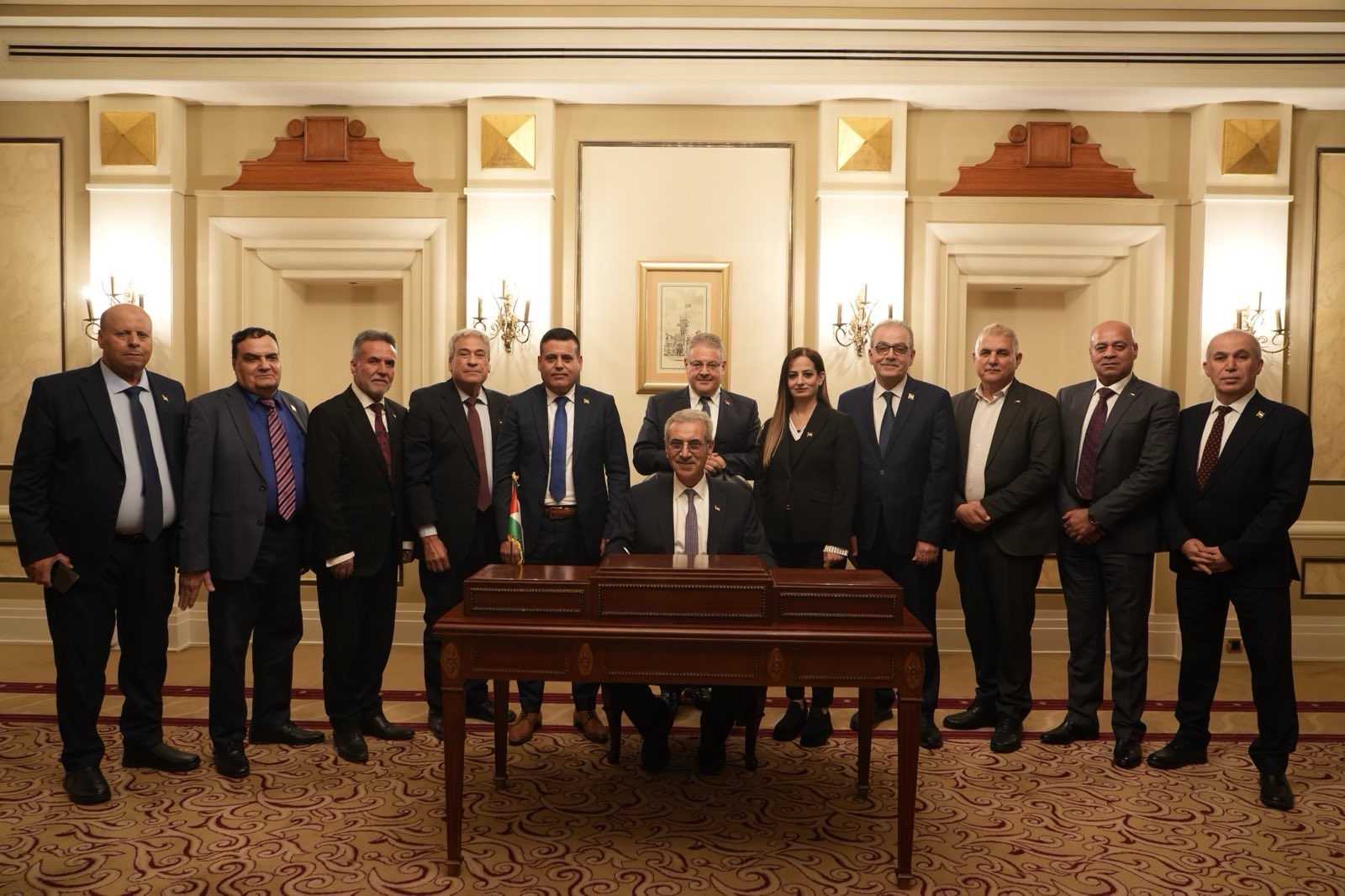
The recovery program was drawn up by the National Committee for the Administration of Gaza under the supervision of the US-led Board of Peace, which is operating under a UN Security Council mandate adopted in November last year.
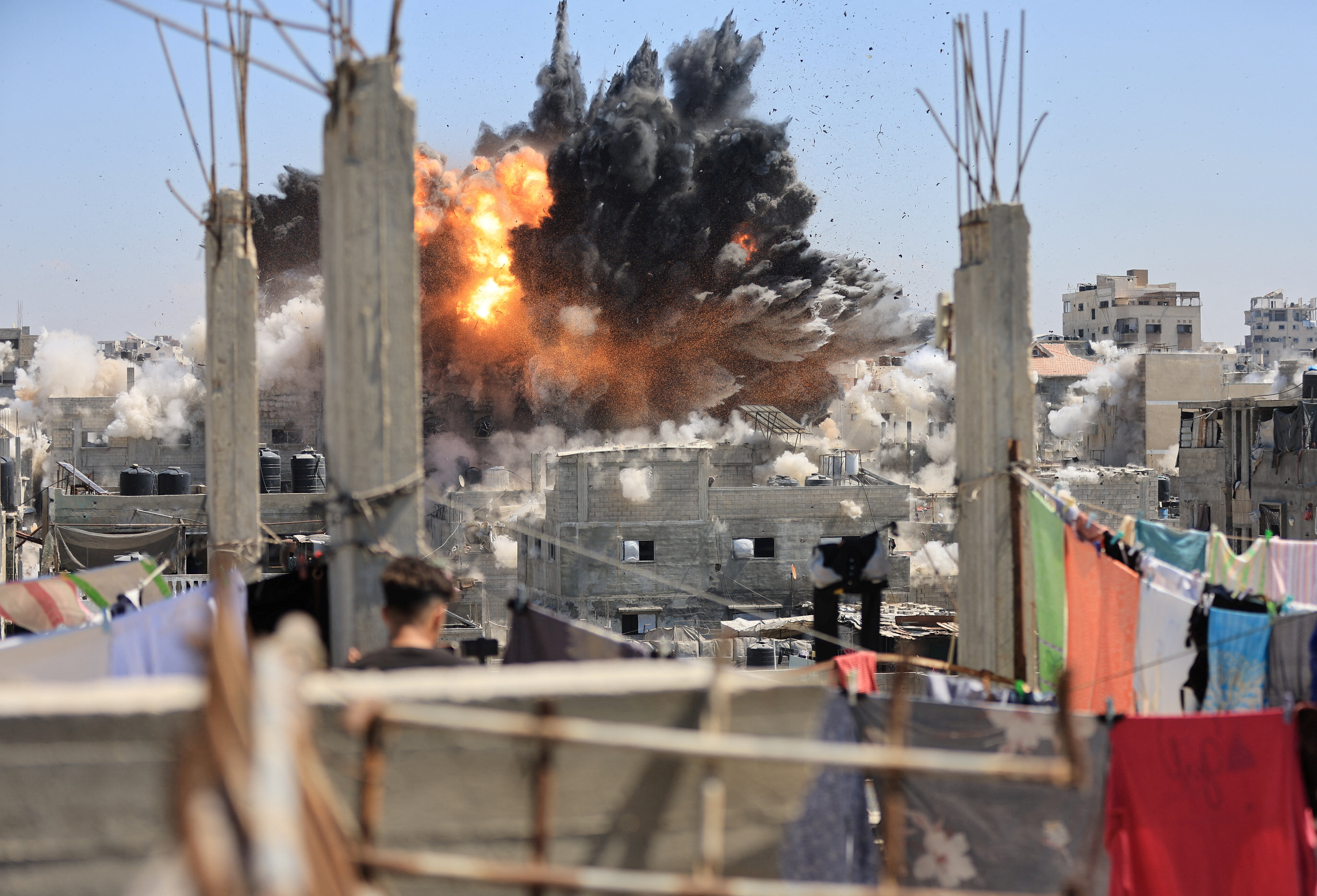
The daunting scale and breadth of the proposed rehabilitation of the war-ravaged Gaza Strip were apparent in every line of the program. Proposals ranged from providing “dignified insulated caravans for people currently living in tents” ($400 million), clearing debris and unexploded munitions ($275 million) and restoring hospitals ($50 million), to a back-to-school program ($40 million), recruiting, training and equipping personnel for the International Stabilization Force ($140 million) and “incentives for the turn-in and safe disposal of weapons and munitions” ($20 million).
But throughout the document’s small print and the remarks of the key speakers, qualifications underscored how much remained beyond the planners’ control: Israeli cooperation, Hamas disarmament, access to Gaza and the release of promised funding.
Right now, said Brian Katulis, a senior fellow at the Middle East Institute specializing in US foreign policy, “this plan by the Board of Peace is the only game in town. But it’s a game riddled with a lot of questions.”
No start date was given for the program, which was “ready to begin the moment funding and access allow.” The ambitious six-month timeframe was the “delivery horizon from entry.” All costs “are rough estimates and subject to change.”
The program also depends on funding previously pledged by international partners beginning to flow.
Among the questions Katulis identified was “a lack of transparency about how this plan is actually funded and operationalized.”
As Ali Shaath, chief commissioner of the National Committee for the Administration of Gaza, wrote in his foreword to the printed program: “We ask partners for political support, for the removal of obstacles, and for resources pooled behind a single plan.”
One overwhelming impression remained after Wednesday’s high-powered presentation. The recovery program, on which the Board of Peace and the NCAG have worked for months, was ready on paper but still awaiting the political and security conditions needed to begin.
“The positive side is that there is now apparently a fairly detailed blueprint for what reconstruction could look like,” said Alaa Zoubi, a researcher at think tank RUSI focused on international security.
“The unresolved question remains whether the political and security conditions necessary to execute that blueprint can actually be created.”
That distinction, she added, “is critical, and whether the plan has been designed around political realities as they are, or around the expectation that those realities will change after the Israeli elections.
“Betting too heavily on the latter could create a dangerous gap between international planning and what is achievable on the ground.”
As Arab News reported last month, Benjamin Netanyahu, the Israeli prime minister, has rejected the Board of Peace’s disarmament roadmap. With an October election approaching and his right-wing coalition opposed to concessions, the prospects for an early change of course remain uncertain.

Israel’s stated objection centers on the order of implementation. Netanyahu insists that Hamas surrender all its weapons before Israeli forces make any further withdrawal. Israeli officials argue that the group could exploit the process to avoid military pressure while retaining its armed capabilities. The board’s roadmap instead envisages a gradual, reciprocal process of disarmament and withdrawal.
Analysts say Hamas, too, must translate commitments into action. Although the group accepted the board’s disarmament roadmap in July, it has yet to relinquish its weapons and control of Gaza to the proposed technocratic administration.
A civilian administration cannot establish effective authority if an armed faction retains the ability to challenge its decisions. Hamas’s acceptance of a roadmap therefore does not, by itself, resolve the question of whether it will surrender the military power on which its influence rests.
With disarmament and withdrawal deadlocked, the NCAG’s leadership remains based in Cairo, while the ISF has yet to deploy in Gaza. Much of the program depends on both being able to operate on the ground.
A week before the program’s unveiling, a copy was leaked to The Times of Israel. As the paper noted, “Almost all of the plans ... require significant cooperation from Israel, which has been largely reluctant to allow such efforts to date.”
Board of Peace officials, the newspaper reported, believe that “Netanyahu’s opposition is motivated by the upcoming Knesset election and that the US-controlled panel will be able to advance the initiative after the vote.”
But, it added, “there are no guarantees that any Israeli government will be willing to cooperate substantially, particularly in the immediate period after the next one is established in November or December.”
After Wednesday’s presentations, journalists were invited to ask questions. The first went to Nickolay Mladenov, the Board of Peace’s high representative for Gaza. “Is Israel blocking your progress,” he was asked, “and do you expect that to change after the Israeli election?”
Mladenov was frank. “Our discussions with Israel right now are not easy because of the elections there,” he said. “Everything is a little bit more emotional, a little bit more politically sensitive.”
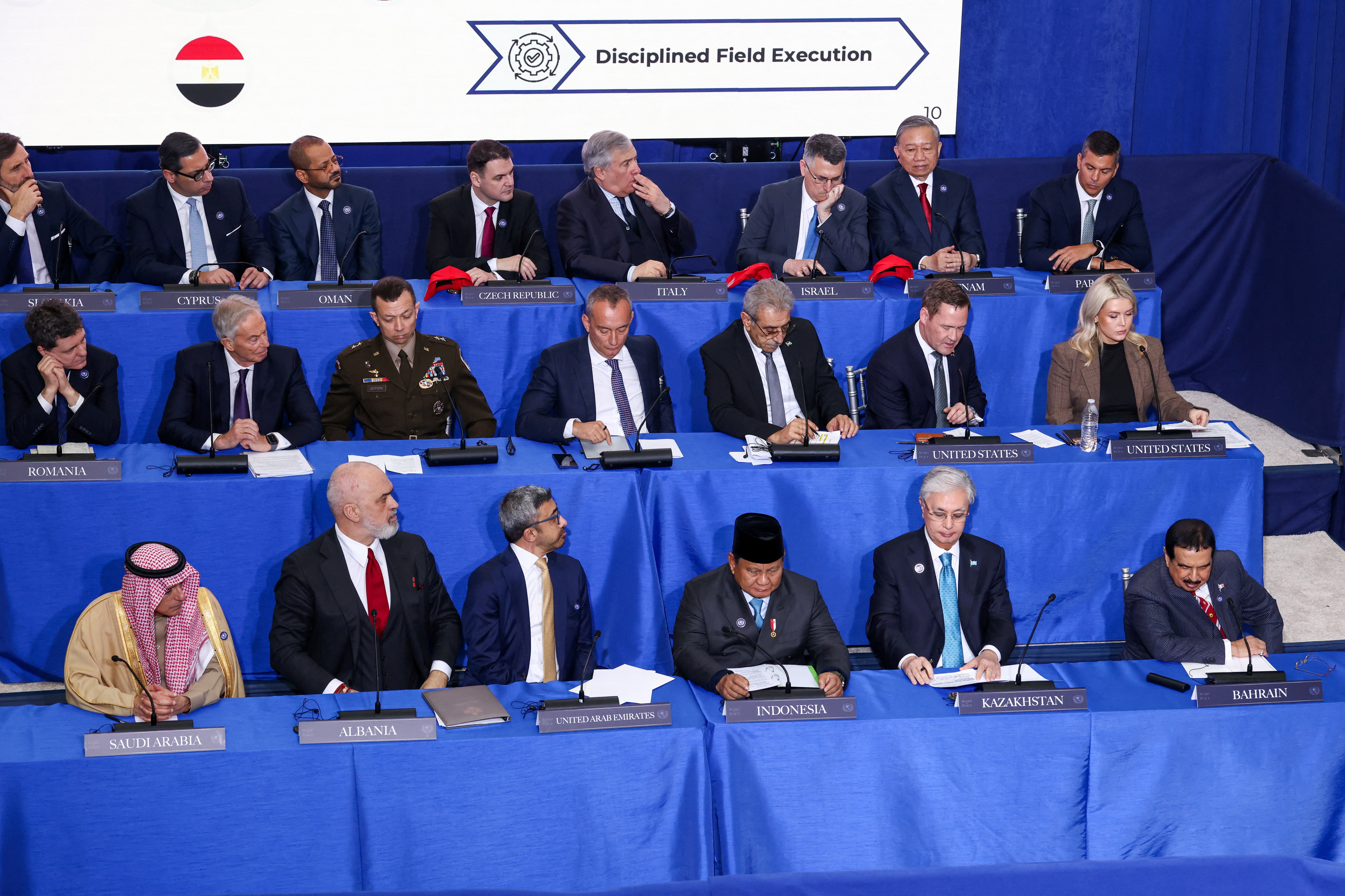
Opening the event, Tony Blair, the former British Prime Minister and an executive board member of the Board of Peace, had urged the diplomats to “please back this plan ... Use your influence with all parties to move the process forward ... to make sure that we finally give those people in Gaza and those people outside of Gaza in Israel who have gone through decades of suffering, decades of indignities, and decades of destruction a chance to break the cycle.”
Although “we’ve had politically significant milestones” over the past year, he acknowledged that the next steps remained difficult.
“Today, we have a ready national committee for the administration of Gaza,” he said. “Commissioners appointed and trained, staff are in place, some of them already inside Gaza, all of them ready to go in and take over control.
“So, how do we move forward? Carefully, step by step.”
Readiness, however, does not settle the question of political legitimacy. Katulis pointed to “concerns about the opaque nature and political legitimacy of the Board of Peace and associated bodies like the National Committee for the Administration of Gaza, and how they relate to other Palestinian entities like the Palestinian Authority.”
Furthermore, he said, “the lack of a clear political horizon for Palestinians and whether the current efforts will contribute to the creation of a Palestinian state that takes into account the voice of the Palestinian people remains a major impediment to these efforts.”
In his video address to the General Assembly on Thursday, Palestinian President Mahmoud Abbas — who had been refused a visa by the US to attend in person — said that while he welcomed President Trump’s 20-point peace plan, he had seen none of it materialize on the ground.
On the contrary, he said, Palestinians in Gaza continued to be subjected to killing, destruction, starvation, attempted forced displacement and “a war of genocide”, while in the West Bank illegal Israeli settlement expansion was accelerating.
“For how long will some states continue to remain silent about Israel, or supply it with the weapons it uses against our people?” he asked.
Hours later, Netanyahu addressed the General Assembly, but not before a large number of delegates walked out in protest. They were, he said, “moral cowards”.
Much of his speech was about Iran — “one day, and it may not be far away, the Iranian people will be free, the murderous regime will be toppled” — and a celebration of the achievements of the Israeli military against groups including Hamas and Hezbollah.
Accusing Israel of genocide in Gaza, he said, was “the greatest lie of the century … Israel didn’t commit genocide, Israel prevented genocide.” Hamas, he said, “would have killed every last one of us.”
Critics of Israel, he said, singling out Western European countries, “have chosen to succumb to the antisemitic mob.”
But in the whole of Netanyahu’s 52-minute address, there was not a single mention of the Gaza peace process.
On paper, said Sarah Yerkes, acting co-director of the Middle East Program at the Carnegie Endowment for International Peace, “the plan seems positive.
“It is quite comprehensive, covering everything from healthcare to education to infrastructure to internet connectivity.
“However, it is a total pipe dream for the foreseeable future. None of the conditions that would require its implementation are anywhere close to where they need to be.
“Israel still controls more than half of Gaza, Hamas has not disarmed and the ISF is not on the ground, not to mention that it is not funded.
“So, while it is great to come up with a wish-list of what a future Gaza needs for long-term stability and socioeconomic success, it is meaningless without the necessary and extremely difficult steps that need to be taken to make any of this even a remote possibility.”
Speaking at the launch, Gen. Jasper Jeffers, commander of the International Stabilization Force, described a force awaiting authorization to deploy.
A year ago, he said, “the ISF was not even a concept (and) the idea of a new Gazan security force was inconceivable.”
Now, there was “an ISF headquarters that operates 24/7 with over 50 international military leaders and planners ... and we’ve trained and prepared our advance force, 500 troops from Kosovo and Morocco, to be ready to deploy.”
Follow-on forces from countries including Albania and Kazakhstan were also being prepared. Of more than 250,000 applicants for the proposed Gazan police force, 19,000 had been vetted, and initial training had begun.
But the troops and police officers were still awaiting deployment.
“Implementation of the plan, even under optimal conditions, would be a challenge,” said Burcu Ozcelik, a senior research fellow for Middle East and North Africa security at RUSI, “and the conditions inside Gaza are far from that, with external stakeholders divided over who can do the heavy lifting to finance the Herculean task of Gaza’s recovery.
“Without tangible convergence across external donors, a workable security settlement inside Gaza, and without Israel’s political endorsement, it’s tough to see this move from aspiration to implementation.”
Jared Kushner, President Donald Trump’s son-in-law and an executive board member of the Board of Peace, emphasized the work already invested in the plan.
“A year ago, none of this existed,” he said at Wednesday’s presentation.
“All these great partners who are really doing this out of the goodness of their hearts and for their passion to see peace and real progress, they could have built a massive company with the sophistication and the effort that has gone into this.”
He added: “We continue to move forward every day. Our plan continues to get better, and even as there’s different delays on different things for whatever reason, we’re still working every day, and we’re just refining, sharpening the axe, getting ready for when we get the time to cut the tree, and hopefully that will be very, very soon.”
Yet even as the Board of Peace presented its plan in New York, five people were reported killed in three separate Israeli attacks in Gaza — a reminder of the insecurity in which any recovery effort would have to operate.
For Katulis, the diplomatic activity does not remove the risk that events will overtake the plan.
“The uncertainty that exists in the Middle East more broadly — the unresolved and inconclusive Iran war and Israel’s elections at the end of next month, along with planned Palestinian elections later this year, combined with the complicated political situation in America in advance of its midterm elections — all point to a great potential that whatever plans were made in September 2026 might be ultimately scuttled by reality as it unfolds over the coming weeks this fall.”